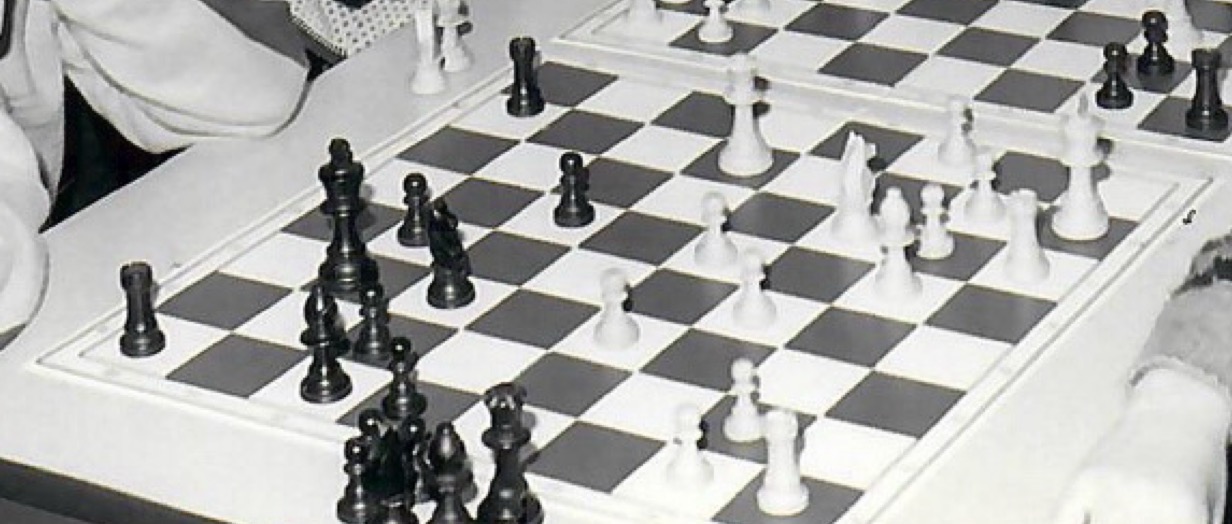
The picture in the header is a photo of me playing chess in a school tournament. I’m about 10 years old. Looking at the board, I was going to lose that game.
I learned chess the way many kids do: how the pieces move, maybe a few basic openings, and then just… play. No tactics. No patterns. No real understanding of why certain moves are good and others aren’t. I knew enough to participate, but not enough to be good.
Fast forward 40-something years.
Knowing how vs. knowing why
These days, I approach things differently. When I pick something up, I want to understand it properly. Not just “how does this work” but “what are the best practices, and why are they best practices?” This applies to everything I do professionally. When a new tool emerges in the data engineering space, I don’t just watch the demo and accept the marketing. I set it up. I break it. I compare it to alternatives. I ask: what problem does this actually solve, and for whom? This curiosity has served me well. It makes me better at what I do. It makes the work more interesting. And it means I can help others navigate choices because I’ve actually done the navigation myself, not just read about it.
But curiosity comes with a flaw.
I overthink things, quite seriously.
When you want to understand everything deeply, you can get stuck in analysis. You research one more option. Read one more article. Consider one more edge case. Before you know it, you’ve spent three hours on a decision that should have taken thirty minutes. Sound familiar? If you’ve ever frozen in front of a cloud architecture diagram wondering whether you need Airflow or if the built-in scheduler is fine, you know exactly what I’m talking about.
The irony is not lost on me. I help people who suffer from analysis paralysis. And I suffer from it myself. Knowing you have a flaw doesn’t make it go away. You have to actively work on it.
Back to the board
Recently, I started playing chess again. But not the slow, contemplative kind. I’m playing Blitz chess. You get 10 minutes total. That’s it. When your clock runs out, you lose. There’s no time to overthink in Blitz. You have to trust your intuition. Make a decision. Move on. If it was wrong, adjust. But sitting there calculating every possibility until you find the perfect move? The clock won’t let you. It’s uncomfortable. My instinct is to think deeper, consider more, make sure I’m not missing anything. The clock doesn’t care about my instincts. It just keeps ticking. And that’s exactly why it’s useful.
Continuous learning isn’t just about adding
When we talk about continuous learning, we usually mean acquiring new skills. Learn Python. Learn Terraform. Learn how Medallion architecture works. Keep adding to what you know. That’s important. But there’s another side to it: unlearning. Working on the patterns and habits that hold you back.
For me, that means learning to trust “good enough” when perfection isn’t required. It means making decisions faster when the stakes don’t warrant extensive analysis. It means recognizing that sometimes the cost of delay is higher than the cost of a suboptimal choice. This is harder than learning a new tool. Tools have documentation. Your own flaws don’t come with a README.
That kid in the photo didn’t overthink anything. He just played. He also lost this game, probably, and It looks like he just spotted a bunny 🙂
The version of me now knows a lot more. But sometimes I get so caught up in knowing that I forget to move. The sweet spot is somewhere in the middle. Know enough to make good decisions. But don’t let the pursuit of perfect knowledge stop you from making any decision at all.
Blitz chess is teaching me this. Every game is practice. Trust what you know. Move. Learn from what happens. Repeat. The picture below is something I was really proud of. It’s a battle though, every time I win a few, I lose a few. And I’m sure “underthinking” is not a word, but I make enough silly mistakes all the time.

It applies to more than chess
If you’re stuck evaluating data platforms, or paralyzed by the number of ways to set up CI/CD, or unsure whether you need dbt or stored procedures or both: you probably know enough already. You’ve done the research. You understand your constraints. You know your team and your business.At some point, you have to trust that and move.
The clock is ticking anyway.